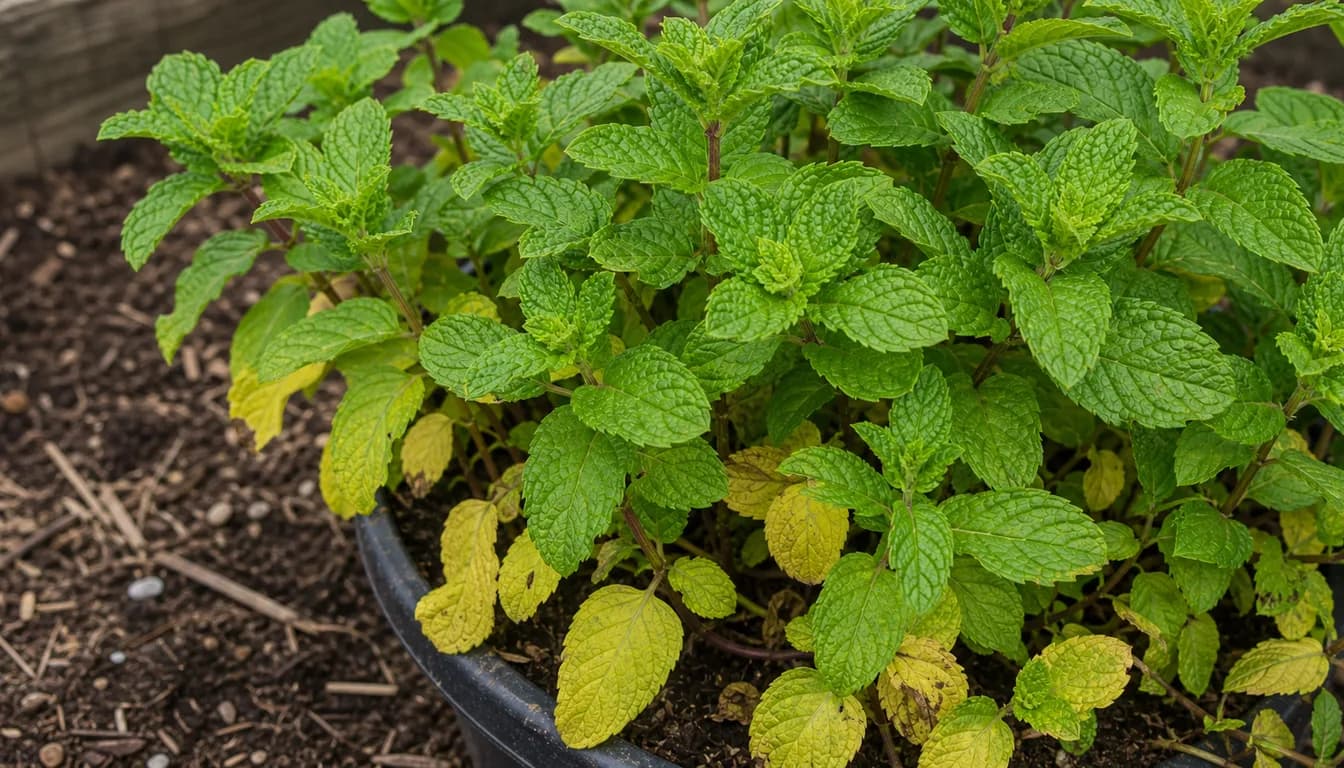
1. Wet roots or wet-dry swings
Likelihood: HighMint likes steady moisture, but it still needs air around the roots. Yellow, limp lower leaves with sour soil, algae on the surface, or a pot that stays heavy match the same pattern described in overwatering signs.
Identification
- remove_circle_outlineLower leaves yellow first and feel soft rather than papery.
- remove_circle_outlineSoil stays wet more than a day or two after watering.
- remove_circle_outlineThe pot has blocked drainage, a tight saucer, or compacted mix.
- remove_circle_outlineRoots look brown, weak, or mushy when the plant is slipped from the pot.
The Fix
- 1Pause watering until the top inch begins to dry.
- 2Clear drainage holes and empty any saucer water after irrigation.
- 3Repot into fresh, airy mix if the root ball smells sour or roots are mushy.
- 4Trim dead yellow leaves so new shoots get light and airflow.
- 5For crispy yellow edges instead of limp foliage, soak the root ball once and then move to steadier deep watering.